Introduction: Exploring Jackson Hole’s Wilderness With Your Canine Companion
Is exploring the majestic landscapes of Jackson Hole and the surrounding Teton mountains with your dog on your bucket list? While Yellowstone and Grand Teton National Parks have restrictions on pets, the Jackson Hole area offers incredible dog-friendly trails that showcase the same breathtaking beauty without the limitations.
This comprehensive guide will show you how to safely navigate Jackson Hole’s spectacular terrain with your four-legged hiking partner. The pristine wilderness of Teton County offers unparalleled natural beauty—quiet forests, sparkling streams, majestic buttes, and fields of sagebrush—but also presents unique challenges that every responsible pet owner should understand before hitting the trails.
Wildlife, dangerous predators, geothermal dangers, and other natural hazards are part of what makes this area so wild and beautiful. Being prepared is essential for enjoying this spectacular region safely with your dog.
Understanding Park Rules and Regulations
Many visitors are surprised to learn that hiking with dogs in Yellowstone and Grand Teton National Parks is significantly restricted. This isn’t to diminish your experience but to protect the delicate ecosystem and wildlife that call these parks home.
National Park Pet Policies
Dogs are not allowed on trails, boardwalks, or in the backcountry in Yellowstone and Grand Teton National Parks. The National Park Service (NPS) policy states that “a pet may go anywhere a car can: roads, road shoulders, campgrounds, picnic areas, parking lots, etc. Pets must be kept under physical control at all times—caged, crated, or restrained on a leash not to exceed 6 feet…”
See my blogpost on crate training!
To enjoy the parks fully, consider alternating days between national park exploration (while your dog stays with a pet sitter) and dog-friendly hiking adventures in the surrounding areas. This allows you to experience both the iconic national parks and the equally impressive landscapes outside the park boundaries where your dog can join you.

Dog-Friendly Trails in Jackson Hole and Surrounding Areas
While the national parks have restrictions, Jackson Hole and the surrounding areas offer spectacular dog-friendly trails that rival the beauty of the parks themselves. Here are some top recommendations:
Jackson Hole Local Trails
- Cache Creek Trailhead: Located just minutes from downtown Jackson, this extensive trail system allows dogs off-leash once you’ve left the parking lot. With a bubbling creek perfect for dog splashing and miles of interconnected trails through aspen groves and mountain meadows, it’s a local favorite.
- Snow King Mountain: This steep but rewarding climb offers panoramic views of Jackson from the summit. Dogs love the varied terrain, and the trail connects to a network of paths around the mountain.
- Old Pass Road: Located in Wilson, this trail provides a gradual climb with spectacular views and off-leash opportunities for well-behaved dogs.
- Teton Pass: Several dog-friendly trails offer alpine meadows filled with wildflowers in summer and breathtaking mountain views throughout the year.
- Flat Creek Trail: This relatively easy trail near the National Elk Refuge allows dogs off-leash and offers creek access for swimming.
Beyond Jackson Hole
The areas surrounding Jackson Hole offer even more opportunities for dog-friendly hiking adventures. Bridger-Teton National Forest, adjacent to Grand Teton National Park, provides vast expanses where dogs can explore off-leash under voice control on most trails. The diverse landscape ranges from dense forests to alpine meadows.
Shoshone National Forest, east of Yellowstone, offers countless dog-friendly hiking options through diverse landscapes including canyons, mountains, and pristine wilderness areas where wildlife sightings are common but typically at a safe distance.
Caribou-Targhee National Forest, just west of Grand Teton National Park, features beautiful trails where dogs can explore off-leash amidst stunning mountain backdrops and lush forests. Many of these trails are less crowded than those closer to Jackson, providing a more peaceful experience.
For a complete resource of local dog-friendly hiking options, check out 8 Dog-Friendly Hikes Around Jackson Hole.
Preparing Your Dog for High-Altitude Adventures
Jackson Hole sits at an elevation of 6,237 feet—more than a mile above sea level—with surrounding trails reaching much higher. This elevation requires thoughtful preparation for both you and your dog to ensure a safe and enjoyable experience.
Veterinary Preparation
Before bringing your dog to Jackson Hole for hiking adventures, schedule a pre-trip veterinary visit to discuss your plans. Your veterinarian can help assess your dog’s fitness for high-altitude activity based on age, breed, and overall health condition. Ensure all vaccinations are current, with special attention to protection against Rocky Mountain Spotted Fever tick, which is particularly important in this region.
If you’re flying to Jackson Hole, you’ll need to obtain a health certificate on your veterinarian’s letterhead stating your dog is fit for air travel and fully vaccinated. Most airlines require this document to be issued within 28 days of your travel date.
Brachycephalic (flat-nosed) breeds like Bulldogs, Pugs, and Boston Terriers may experience respiratory challenges at higher elevations. Discuss this with your veterinarian, who might recommend adaptogens, carrying a canister of oxygen, or other strategies to help your dog cope with the thinner air.
Altitude Acclimation for Dogs
Just like humans, dogs need time to adjust to higher elevations:
Limit activity for the first 24-48 hours after arrival to allow your dog’s body to adapt to the decreased oxygen levels. Begin with shorter, gentler walks around town before tackling longer mountain trails. As your dog acclimates, gradually increase hike lengths and difficulty.
Watch closely for signs of altitude sickness, which include excessive panting, lethargy, decreased appetite, or vomiting. If these symptoms appear, return to lower elevation and allow more acclimation time. Keep your dog well-hydrated before, during, and after hikes, as the dry mountain air accelerates dehydration.
“When providing pet sitting services for visitors to Jackson Hole, we carefully consider each dog’s acclimation needs. We tailor our exercise plans according to how long they’ve been in the area, their breed, and their fitness level. For dogs new to our high elevation, we recommend shorter, gentler walks initially before building up to more challenging hikes as they adjust to the mountain environment.”
Wildlife Safety: Protecting Your Dog in Bear Country
Jackson Hole is home to diverse wildlife, including moose, elk, and bears. Understanding how to safely navigate potential wildlife encounters is crucial when hiking with your dog.
Bear Awareness and Safety
Studies show that approximately half of all bear attacks involving humans also involve an off-leash dog. This sobering statistic highlights the importance of proper wildlife preparation:
Bear Safety Essentials:
- Always carry bear spray and know how to use it. Bear spray (not pepper spray) contains at least 30% oleoresin capsicum and can be purchased or rented in Jackson. Practice removing the safety cap and understand proper deployment techniques before hitting the trails.
- Keep your dog under control at all times. This might mean:
- Using a 6-foot leash in areas with known wildlife activity
- Having exceptional voice recall training
- Using an e-collar for immediate recall (more on this below)
- Make noise while hiking to avoid surprising wildlife:
- Attach bells to your dog’s collar
- Talk or sing while walking
- Hike in groups when possible
- Be alert to signs of wildlife:
- Fresh scat on the trail
- Torn logs or disturbed areas
- Bird behavior (sudden silence can indicate predator presence)
- Strong odors (bears have a distinct smell)
- Know what to do if you encounter a bear:
- For black bears: Stand your ground, make yourself look big, and make loud noises
- For grizzly bears: Avoid eye contact, slowly back away, and have bear spray ready
- If attacked by a grizzly, play dead; if attacked by a black bear, fight back
- Never run from a bear—they can reach speeds of 30 mph
Other Wildlife Considerations
While bears receive the most attention, other Jackson Hole wildlife can also pose risks to your dog:
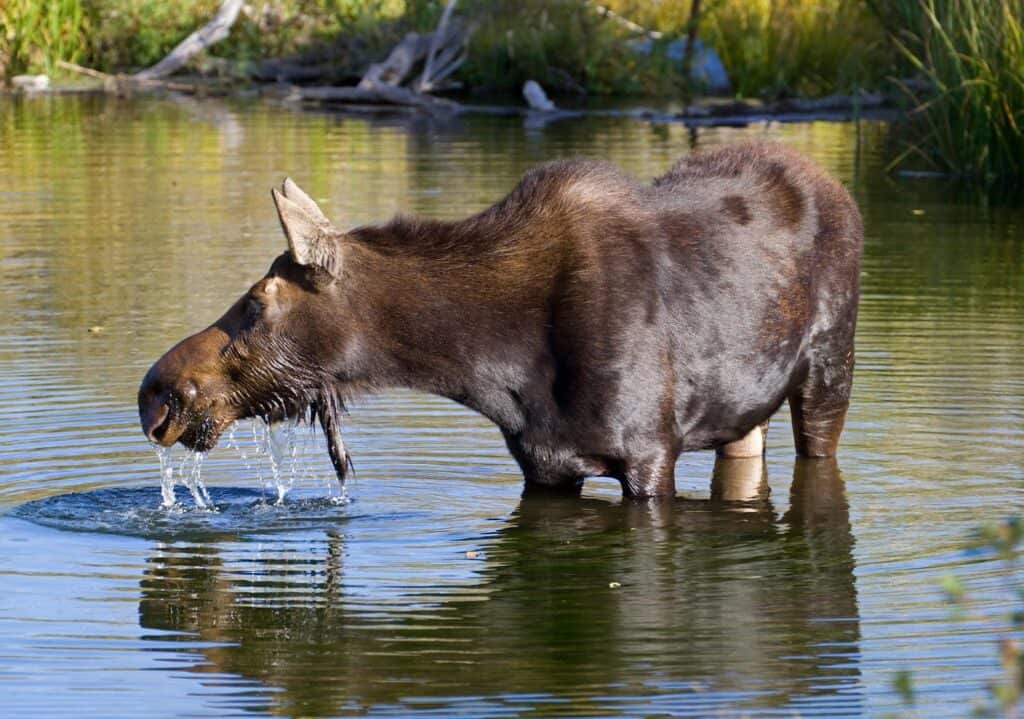
Moose are often underestimated but can be extremely dangerous when threatened, especially cows with calves. These massive animals are surprisingly fast and agile, and they won’t hesitate to defend themselves against perceived threats. Always give moose a wide berth and keep your dog close when you encounter them.
Porcupines present a painful problem for curious dogs. If your dog gets quilled, resist the urge to remove the quills yourself. Seek immediate veterinary care, as quill ends can migrate into the skin and break off, causing abscesses and infection. Try to keep your dog from pawing at the quills, which could push them in deeper.
Skunks, while not dangerous, can make for an unpleasant vacation experience. They’re nocturnal and generally non-aggressive, living in hollow logs, under sheds and porches where insects and rodents are plentiful. Small holes dug for grubs are signs of nearby skunks. Consider carrying a skunk odor elimination kit when hiking in areas where skunks are common.
Snakes like the prairie rattlesnake, though rare in Teton County, are venomous and require immediate attention if your dog is bitten. When hiking in snake habitat, keep your dog close and stick to well-traveled paths. While canine snake avoidance training is an option, it’s rarely necessary in most Jackson Hole hiking areas.
Off-Leash Training: The E-Collar Advantage
For well-trained dogs, exploring off-leash can enhance their wilderness experience, but safety must remain the priority. Electronic training collars (e-collars) can be valuable tools when hiking in wildlife-rich environments.
E-Collar Training Basics
An e-collar consists of a rechargeable collar your dog wears and a hand-held remote that allows you to send a signal to the collar. Modern e-collars offer multiple stimulation levels, from a gentle vibration to stronger corrections when necessary.
Benefits of proper e-collar training include:
- Immediate recall capability, even when wildlife is present
- Freedom for your dog to explore while maintaining control
- The ability to quickly bring your dog to your side in emergency situations
Important: E-collars are training tools, not punishment devices. Proper training is essential before relying on an e-collar on the trail. Consider consulting with a professional trainer before implementation.
For more information on e-collar training, check out our blog post on The E-Collar: Miracle Training Tool.
Essential Gear for Dog-Friendly Hiking in the Tetons
Having the right equipment makes your Jackson Hole hiking adventures safer and more enjoyable. Here’s what experienced local dog owners recommend:
Hiking Essentials
A sturdy leash and collar/harness with ID tags including your cell phone number is fundamental. Even if you plan to hike off-leash, always have a leash readily available. Consider carrying two leashes—one around your neck and one secured to your dog’s collar for quick access.
Water and a collapsible bowl are critical in the mountain environment. While streams and lakes are plentiful, they may contain harmful bacteria like Giardia. A portable water filter like the LifeStraw or Grayl GeoPress allows you to safely filter water for both you and your dog during longer hikes.
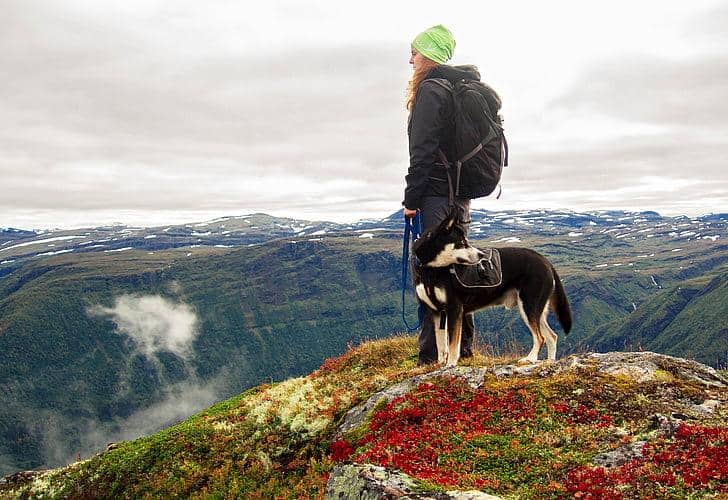
For more substantial journeys, a dog backpack appropriate to your dog’s size and conditioning can allow them to carry their own supplies. Start with an empty pack and gradually increase weight as your dog becomes accustomed to it.
A comprehensive dog-specific first aid kit should include tweezers for tick removal, bandages and gauze, styptic powder to stop bleeding, saline solution for wound cleaning, and any medications prescribed by your veterinarian. Consider adding canine-specific items like a muzzle (useful if your dog is injured and in pain) and an extra small leash.
For rough terrain or hot surfaces, dog booties protect paws from sharp rocks, hot ground, and ice. A cooling vest can prevent overheating during summer hikes, while a dog life jacket is essential if your adventures include lakes or river crossings.
Emergency Preparedness
For more serious emergency situations, consider:
- Rescue harness that allows you to carry a larger injured dog (products like the Airlift by Fido Pro or the Mountain Dogware Pack-a-Paw)
- Extra food and water in case your hike takes longer than expected
- Emergency contact information for local veterinarians
- Basic knowledge of canine CPR and first aid
Seasonal Considerations for Jackson Hole Dog Hiking
Each season in Jackson Hole offers unique experiences and challenges for dog hiking adventures.
Summer Hiking (June-August)
- Heat considerations: Even at elevation, summer days can get hot. Hike early morning or evening.
- Wildflower meadows: Peak bloom occurs in July and early August.
- Mosquitoes and flies: Bring pet-safe insect repellent.
- Thunderstorms: Afternoon thunderstorms are common; avoid exposed ridges.
- Crowded trails: Popular trails will be busier; consider less-traveled options.
Fall Hiking (September-October)
- Ideal temperatures: Perfect weather for longer hikes.
- Wildlife activity: Animals are preparing for winter; increased vigilance needed.
- Fall colors: Aspen groves turn brilliant gold in late September.
- Hunting season: Check local regulations and consider bright vests for you and your dog.
Winter & Spring Considerations
- Snow conditions: Many trails require snowshoes or cross-country skis in winter.
- Avalanche danger: Know the risks and check forecasts.
- Shorter daylight hours: Plan accordingly.
- Spring mud season: Lower trails can be very muddy in April-May.
- Spring wildlife: Bears emerge from hibernation in spring; extra caution needed.
What to Do When You Can’t Take Your Dog

When activities or attractions don’t allow dogs—such as national park trails, river rafting trips, or fine dining—you’ll need reliable pet care options.
Jackson Hole Pet Sitting Services
At Jackson Hole Pet Sitting, we offer comprehensive pet care for both locals and visitors. Our services include:
In-home pet sitting in your vacation rental or hotel (when permitted) allows your dog to stay in comfortable, familiar surroundings while you explore areas where pets aren’t allowed. Our professional sitters provide personalized care tailored to your dog’s needs and routine.
Dog hiking services on local trails with experienced handlers give your dog exercise and adventure even on days when you’re occupied elsewhere. Our guides know the safest and most enjoyable trails for different dog personalities and energy levels.
Day care while you explore the national parks ensures your dog receives attention, exercise, and care throughout the day. We can coordinate pickup and drop-off times around your sightseeing schedule.
Overnight care for extended adventures provides peace of mind knowing your dog is comfortable and well-cared for during longer excursions, like backpacking trips or overnight stays in areas where dogs aren’t permitted.
Pet transportation from Jackson Hole Airport or to/from activities makes logistics easier, especially if you’re arriving without a vehicle or need help getting your pet to and from care locations. Save time by creating a pet profile on BringFido’s website or mobile app. Upload her health records for access at any time. www.bringfido.com
When RVing, scout dog parks along the way: Use apps, maps or websites to find dog-friendly parks and trails along your route. I like GoPetFriendly, Bringfido.com, and alltrails.com.
Our professional pet sitters are knowledgeable about local wildlife, trail conditions, and the specific needs of dogs at high elevation. We’re fully insured, background-checked, and experienced in caring for pets with a variety of needs.
Other Local Pet Care Options
Additional pet care resources in Jackson Hole include:
- VCA Spring Creek Animal Hospital – Boarding: 307-733-1606
- Dog Jax by Wiggles n Woofs – Boarding: 307-733-3647
- Happy Tails Pet Resort – Boarding: 307-733-1606
- Homestead Hound – Boarding: 307-690-1260
Toxic Plants and Dietary Dangers on Jackson Hole Trails
While exploring the trails, be aware of potential toxic plants and dietary hazards that could harm your dog.
Common Toxic Plants in Wyoming
- Larkspur (Delphinium spp.): Contains alkaloids that can cause neuromuscular paralysis
- Death Camas (Zigadenus spp.): All parts are toxic and can cause critical drops in heart rate
- Locoweed (Oxytropis spp.): Can lead to neurological issues and erratic behavior
- Water Hemlock (Cicuta maculata): Extremely poisonous; can cause seizures and rapid death
- Foxtail Barley: Not toxic when eaten, but barbed seed heads can embed in skin causing infection
Other Dietary Concerns
- Wildlife feces: Dogs often investigate and sometimes consume animal droppings, which can contain parasites
- Carcasses: The instinct to roll in or consume carrion can expose your dog to disease
- Giardia: Present in many mountain streams; always filter water for both you and your dog
If you suspect your dog has consumed something toxic, contact a local veterinarian immediately:
- Jackson Animal Hospital: 307-733-6450
- VCA Spring Creek Animal Hospital: 307-733-1606
- Fish Creek Veterinary Clinic: 307-733-4424
- Dr. Dave’s Mobile Vet Care: 307-413-4848
Conclusion: Creating Memorable Mountain Adventures With Your Dog
Exploring the trails around Jackson Hole with your canine companion can be one of life’s greatest joys. The stunning landscapes, diverse wildlife, and dog-friendly community make it an ideal destination for outdoor enthusiasts and their four-legged friends.
By understanding the regulations, preparing properly, respecting wildlife, and prioritizing safety, you can create unforgettable memories in one of America’s most spectacular outdoor playgrounds. The key is finding the perfect balance between adventure and responsibility.
When you can’t take your dog along, Jackson Hole Pet Sitting is here to ensure your pet receives exceptional care while you explore all that this remarkable region has to offer. Our team’s intimate knowledge of local conditions and deep experience with dogs of all breeds and sizes means your best friend will be in capable, caring hands.
We invite you to contact us to learn more about our services or to discuss your specific pet care needs during your Jackson Hole adventure.
For more information about our dog walking and pet sitting services, visit Jackson Hole Pet Sitting.
With love and all paws in,
The Jackson Hole Pet Sitting Team