A Walk is Love in Action – for Both of You!
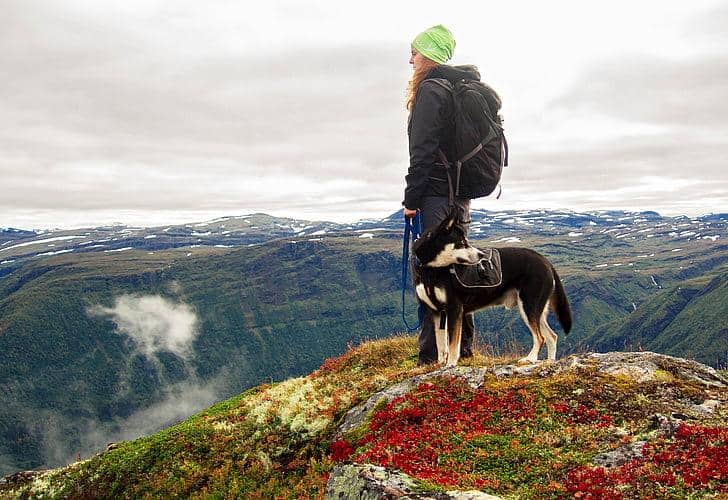
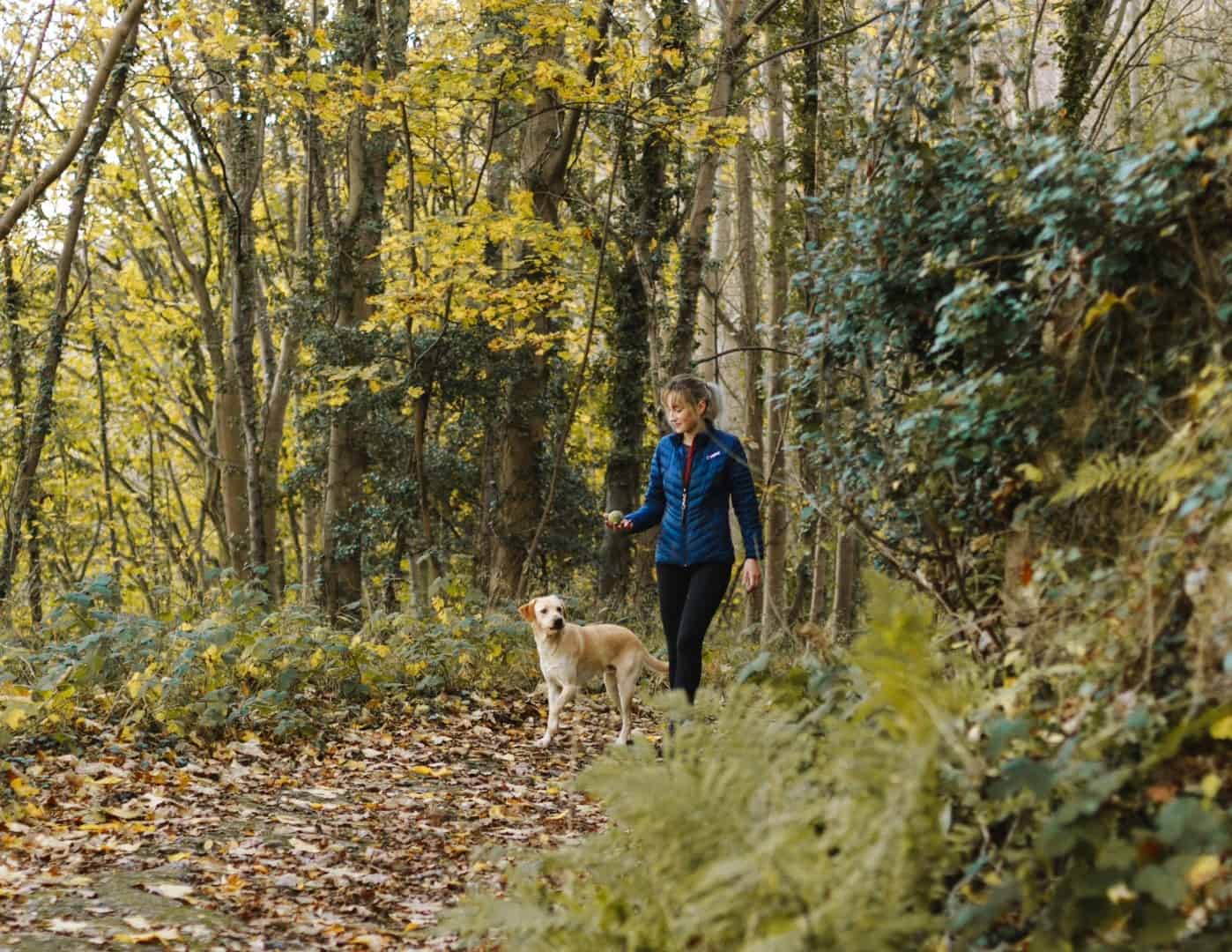
Enjoy this guide to walking your dog in the Tetons. It outlines all the mental and physical benefits of walking for your dog and you, his favorite human. Consider the many different types of walks you can explore. This guide also offers important safety tips for walking and hiking in our wildlife-rich environment here in Teton County.
Days Can be Dull
Chances are, walking the dog is a tedious chore. Take Fido out, watch him pee and poop, then back inside he goes. Repetitive but necessary.
But how does your canine feel about it? Most dogs spend their days inside the house, sedentary and understimulated. Chances are, even short walks are the highlights of his day.
For Your Dog:
- A good walk stimulates all five of his senses. It nourishes and lifts his mood, and enriches his spirit. It’s an expedition into an olfactory world as information-rich as YouTube or perusing the newspaper for you and me;
- His superior hearing tunes him into things that escape our notice entirely. These primal urges feed a part of your dog’s brain that he doesn’t get to exercise much indoors. Walks allow him to exercise primal skills that awaken his instincts;
- Walks inform him about his surroundings, stimulate his brain, and test his mental acuity. Walks are sensory-rich experiences where he gets to process a dizzying array of information. All while exercising his muscles, heart, lungs, and joints;
- The more time he spends in nature or the dog park, the healthier your dog’s body and mind will be. This is the road to a happy and fulfilled canine temperament.
Connecting with nature, frolicking, moving muscles, and connecting with the great outdoors, are simple but essential pleasures for dogs.
For You:
Walking is also fantastic for your own physical and mental well-being. If you need more convincing, read on:
- Physical Exercise: Walking with or without your dog provides excellent low-impact cardiovascular exercise, keeping your heart and muscles healthy;
- Weight Management: Regular walking burns calories and awakens muscles and joints;
- Vitamin D: Spending time outdoors exposes you to natural sunlight, allowing your body to produce essential vitamin D, crucial for bone health and overall well-being;
- Stress Reduction: Walking in nature reduces stress and anxiety, helping mental health. Go tech-free for a tech break;
- Social Interaction: Dog walking often leads to social interactions with other dog owners, fostering a sense of community and reducing feelings of loneliness or isolation; you also get to see how your dog interacts with people and other dogs, an important gauge of his mental and physical health.
- Mindfulness: Walking provides an opportunity to practice mindfulness as you focus on the present moment, the environment, and the joy of moving;
- Routine and Discipline: Establishing a routine for daily walks instills a sense of discipline and structure in your life and your dog’s.
Even a 20-minute walk offers numerous health benefits, including promoting an active lifestyle, reducing stress, and fostering a deeper connection with nature and community. So, the next time you grab that leash, remember you’re not just taking your dog for a walk but also investing in your own well-being.
Additional Benefits to Walking Your Dog
Appreciating the countless benefits walks bring your dog will inspire you to get him outside more often and for longer periods. Walking with Fido benefits:
- If on-leash, his leash manners;
- If off-leash, his recall (returning to you when you call him);
- His mood, his brain, and his mental health;
- The feeling of wellness any movement brings him;
- His brain, by the flood endorphins and dopamine released by movement;
- His ability to tolerate long periods of sedentariness, boredom, and stress – and thus, his behavior at home;
- Your companionship bond and your appreciation and love for eachother.
Physical Health
Regular walks contribute immensely to physical health, especially those where Doggo gets to explore, track, sniff, and cavort. Walks help to expend and gain energy, maintain a healthy weight, and are natural mood lifters.
The physical workout affects:
- Joint Health: Any exercise helps maintain joint health by lubricating joints with synovial fluid. It’s essential for dog breeds prone to arthritis and hip dysplasia. Any movement gets all systems moving: lymphatic, nervous, and hormonal.
- Lymphatic and other systems: movement benefits his lymphatic system, his nervous system, and helps balance hormones responsible for countless tasks in the body;
- Increase in Bone Density: Weight-bearing exercises like walking improve bone density. Walking is vital for your and your dog’s overall skeletal health, preventing conditions like osteoporosis.
- Muscle Use and Strengthening: Walking, running, and frolicking engage various muscle groups, strengthening them over time. Strong muscles support the joints and spine, reducing the risk of injuries and aiding in everyday movements.
- Endorphin Release: Physical activity triggers the release of endorphins, nature’s painkillers. These improve mood, reduce aches and stiffness, and contribute to overall well-being.
- Dopamine Release: Even slow walking stimulates the release of dopamine, a neurotransmitter associated with pleasure and reward. This leads to improved mood and behavior.
- Adrenaline Regulation: Regular exercise helps regulate adrenaline, a hormone that influences the body’s ‘fight or flight’ response. When adrenaline levels are controlled, we and our dogs have less anxiety and hyperactivity.
- Cardiovascular Health: Walking is a great cardiovascular exercise for dogs and their humans. It strengthens the heart and lungs, improves circulation, and reduces the risk of obesity.
Mental and Emotional Stimulation
Energy spent playing, romping, and exploring can reduce bad habits at home. A tired dog is often a calmer and happier dog.
Walking outside offers many benefits and is super exciting for canines. Birds in the sky! Smells in the sagebrush! Nature sounds everywhere: birds, insects, people, cars, planes, other animals! This delightful deluge of information satisfies a dog’s natural need for mental stimulation and his primal need to know, explore, and participate.
Renowned dog whisperer Cesar Millan reminds us, “Fulfilling your dog’s needs leads to a happy, balanced dog.”
Sniffing as a Natural Behavior
For dogs, each sniff holds vast amounts of information. The cognitive benefits of dogs’ mental stimulation from sniffing and exploring are endless. Sniffing calms dogs, allowing them to focus on the present moment reducing anxiety and stress levels.
While sniffing, your dog’s brain becomes active and engaged. It’s a naturally fulfilling way for him to gather and interpret information, making each walk mentally taxing—in a good way—and enriching.
As Alexandra Horowitz writes in Inside of a Dog, “To a dog, there is no such thing as ‘fresh air.’ Every breath of air they take is a story of some kind.”
Sniffing is exploration and discovery, learning and understanding. The variety of information he picks up, from the mundane to the unusual, offers immense pleasure and satisfaction. You can see it in his body language. The joy is palpable. It’s not just smelling: a dog’s time spent in this olfactory wonderland involves a complex and totally engrossing process of gathering, interpreting, fact-finding, and learning from the environment. This plays a significant role in fulfilling their natural instincts, cognitive functions, and mental health.
Your dog’s olfactory sense is much stronger than yours. His sniffing rewards him with oodles of information about his environment. It can even help protect you: watch his fur stand up as he smells the recent presence of a strange animal. Chances are, he knows whether it’s in estrus or lactating, male or female, healthy or sick, close by or long gone.
Allowing him time to sniff is essential; it’s like visiting with friends and getting the lowdown on the latest neighborhood gossip, the conditions of his neighbors, what plants are available for a taste, and whether a predator has been in the vicinity – or is still nearby.
High-energy dogs often develop behavioral issues when they don’t get enough physical and mental stimulation. I find off-leash and self-directed movement best for these dogs. Without enough stimulation, they develop problems like anxiety, aggression, and even depression. They often start chewing, digging, barking, door-dashing, destroying things in your house, and even reacting aggressively with pack members – whether other animals or your own family members.
Free Walks
Allowing your dog to lead and explore on walks has many benefits. It can strengthen your bond as you show you trust him. Of course, this is only possible when you’ve trained him in instant recall. Especially in Jackson Hole’s wildlife-rich environment, you must be able to get him back to you instantly. Many unfortunate encounters are made worse by a dog’s behavior. He may be tempted to rush the other animal to protect you, or to claim his territory against a much larger and more dangerous animal.
Teaching a dog to walk off-leash in nature is a real training accomplishment and a profound way to enhance her mental and physical well-being. Being off-leash allows dogs to explore their environment freely, crucial for their sensory stimulation and overall happiness. Dogs need to move, gather, and track in this sensory playground called nature, that they were born to master.
Walking off-leash allows dogs to set their own pace, explore more thoroughly, and engage deeply with their surroundings. This freedom is essential for them to experience a variety of scents, sights, and textures that they might miss when constrained by a leash. Dogs have an innate need to sniff and track scents – a significant part of how they perceive the world. When allowed to follow these scents, albeit not too far from their owner, they fulfill a basic instinctual craving that can improve mental health and reduce stress.
Letting him freely investigate and sniff to his heart’s content, satisfies his natural curiosity. This refreshes him from the dullness of the day, allowing him full engagement with the world. Regular free walks have even been shown to help prevent cognitive decline in aging dogs by keeping their minds active and engaged.
Free walking can significantly enhance a dog’s sense of independence and confidence. With the freedom to make his own decisions—such as which trail to sniff or which direction to explore—dogs can develop a stronger sense of self-assurance. This is particularly true with a dog who feels inhibited or anxious when tethered — and many do.
The trust your dog feels when you allow him to navigate the world off-leash reinforces his trust in you, deepening that precious and unique bond. It signals to your dog that you trust him, that you believe in his ability to behave and make decisions. This trust is fundamental to a healthy relationship built on mutual respect.
Physically, off-leash walking provides significant benefits. Dogs on a leash can undoubtedly get good exercise. However, dogs tend to move more freely and vigorously when off-leash. They can vary their pace, sprint when energetic, or slow down to investigate interesting objects or scents. This variability in exercise intensity is excellent for cardiovascular health, helping to raise their heart rate more effectively than a steady, restrained walk might. When dogs can move their bodies in more natural and varied ways, they engage different muscle groups and improve their overall physical condition.
Training a dog for off-leash walking requires patience, consistency, and a solid foundation of basic obedience. The training should always begin in a safe, enclosed area where the dog can learn to respond to commands without the risk of running into traffic or getting lost. Key commands that the dog must master include come, stay, and leave it. Positive reinforcement techniques are crucial; rewarding your dog for returning to you or staying close reinforces the desired behaviors. Bring some high-value treats as rewards for returning to you immediately. Use lots of praise and affection. Over time, as your dog proves reliable and responsive, you can gradually introduce more challenging environments.
Do consider local regulations regarding dogs and leashes. Some areas have strict laws protecting wildlife and people. Always ensure the area where you allow your dog to be off-leash is safe and legally compliant.
What’s in a Smell? Or, Everybody Poops
Scenting is your dog’s version of watching a great movie or reading a fantastic article. A single patch of urine or scat encountered by your dog gives him a crazy amount of information in a millisecond, including:
- Species: Scat and urine carry unique chemical signatures.
- Gender: Scat and urine carry hormones and pheromones, revealing gender.
- Reproductive and Health Status: Scat and urine carry information about reproductive status, like whether a female is in estrus (heat), which is essential during mating season. These facts excite your dog, even if he’s been neutered or is female. Illnesses, infections, age, and even what the animal has recently eaten are revealed. If you were a dog, wouldn’t you want to know?
- Heightened Sensory Alertness: Coming across a wild animal’s scat is exciting and cautionary. Your dog’s senses are on high alert. He becomes aware that he might have to protect you, or himself.
- Curiosity and Investigation: Dogs are naturally curious. If allowed to, they’ll spend considerable time and energy investigating and gathering information. He may track a scent to a nearby badger hole and, in the process, make other exciting discoveries.
- Instinctual Behaviors: Encountering the scat of a wild animal triggers a dog’s primal instincts. Depending on the dog’s temperament and training, he may try to track it, or simply go on to the next scent. By barking or getting closer to you, he may warn you if the scent is fresh. Watch his hackles (his upper shoulders) and be alert to a possible threat.
- Marking: He may pee on an animal’s scat or urine to mark it with his own unique scent. There are many theories out there about why dogs mark. I believe the dog is saying “I’m here, and I matter.” Sometimes he’s covering up a scent he doesn’t want other animals to know is there–like a female in estrus. Watch your dog to see what he tends to do. My dog Izzy will cover up my other dog, Chance’s pee, when she’s just witnessed it, but at other times, she couldn’t care less. Sometimes, both dogs mark on strange scat left on the path on our customary walk through the sagebrush. At other times they’re too excited about other discoveries to take the time.
- Keeping you safe: Your dog can keep you safer. He wants to be a helpful pack member, and sniffing helps him do better on the job. I’ve often seen my dogs’ hackles go up, and suddenly walk closer to me. I’m certain they felt protective or cautious and wanted proximity safety.
- Mental Processing and Learning: Sensory experiences are learning opportunities. Dogs process this new information, adding it to the mental map of their environment, its inhabitants, and their role.
- Energy Out, Energy In: Walking and running around drain his energy, simultaneously calming his central nervous system and creating more energy in his body. Tracking scents makes it exciting and keeps him moving.
The natural world’s dazzling array of sounds, sights, and smells, captivates and nourishes your dog, on-leash or off. It’s how he lives it up! He’ll go home with an engaged and satisfied brain, and a lot of appreciation for you.
Mind Your Manners
Of course, a dog can’t always have her walks off-leash. In many circumstances, she must be leashed, and if she isn’t, she can’t be with you at that particular place or activity. Teaching her to behave when leashed lets her accompany you on more excursions than she’d otherwise be allowed.
On-leash walks help your dog practice her leash etiquette. You can teach her to tolerate the insufferable leash long enough to earn some off-leash time. She shouldn’t pull you, and should keep up with you as you set the pace. Then again, she may not want to, preferring to stop and investigate. I like to keep a happy medium with keeping a dog leashed for a time. Then I let them explore and lead a bit, and it’s these times I use voice commands to see how she’ll follow my lead. Some dogs may need you to insist a bit. It may be old-fashioned, but I think my dogs need to be reminded that I’m the boss.
Use your discretion to determine whether your dog is an off-leash first or an off-leash second kind of canine. Young and highly energetic dogs often MUST get their energy out before they can learn, pay attention to you, or even respond appropriately to being on-leash. This is when it’s best to toss a ball in a fenced yard for several minutes to get her energy out and her endorphins flowing. Helping her get some energy out will help her pay attention to you later on a leashed walk. She’ll be more likely to enjoy being connected to you by the leash if she’s feeling refreshed by some off-leash exercise. Some dogs really run the show and need to earn the off-leash by behaving well on-leash first.
Togetherness: Besties Forever
Movement and play release endorphins. Throwing a stick or a rock encourages your dog to pay more attention to you. He’s compelled to participate by bringing the ball or stick back to you, or to simply enjoying chasing and finding what you’ve thrown. Walks bring his senses alive. As he associates this joy with you, this strengthens your bond.
Walking my dogs is a chance for us to be together in nature. They know my attention is with them while we experience the same sounds, sights, and smells. They get excited when the collars go on, and I put on my hiking boots. A dog’s person is the leader of their pack, and the time their leader spends walking them is never wasted.
Types Of Walks
Free Walks
Allowing your dog to lead and explore on walks can strengthen your bond, as you show trust and understanding of his need to move, gather, and track in this sensory playground he was born to master. Satisfying his natural curiosity helps his mental health.
Adrenalin Run
This type of walk is best in an environment where Doggo can go off-leash to explore, play with other dogs, chase and retrieve, or race with his buddy. It’s perfect when you’re short on time, giving you great bang for your buck.
Toss and Fetch
The Toss and Fetch, like the Adrenaline Run, is great for quickly giving her bursts of activity.
Notice how eager she is to chase a stick you’ve thrown. If you’ve trained her in retrieval, notice how proudly she fetches it up and brings it back to you. She feels useful, engaged, and companionable. That back-and-forth play requires both your attention and her response, and she loves it. Notice her anticipation: her excited, adoring gaze on you as you throw it again. For a dog, this is love in action. You, my dog-loving friend, are speaking her love language.
Energy break
Sometimes a walk must be short, but even these give help her release some dopamine and endorphins. The information-rich news dumps your dog discovers in her own yard refresh and invigorate her. A dog outside is usually a dog engaged.
Sniffari
Simply slow down. Let him set the pace so he can follow his nose. Observe the natural beauty of the path, the sky, and the sounds around you. If he hasn’t already, your dog will most likely get on a scent quickly and pause to check it out. Sniffing, looking, and listening outside is a full-immersion experience – a visit to the rest of the world when his inside hours seem so long.
This is when your dog feels most alive in the world. Let him connect with his instincts, smelling clues, and solving mysteries. His eager sniffing lights up his brain, increasing his blood oxygen, and nourishing every cell. The more he smells the better he’ll get at scenting, but only if you slow down and allow him the time.
You don’t have to go far to prioritize your dog’s nose and brain. But tapping into your dog’s scenting abilities is an essential form of mental exercise.
Choose Your Own Adventure
Who’s the captain of dog walks? Usually, it’s the human end of the leash. But this fun walk lets your dog chart his own course for a change. In a safe place, allow him to follow his senses wherever they may lead.
Rather than your usual route, allow your dog to take the lead and follow him as he decides where to go. Instead of charging ahead at a crossroads, pause and let your dog choose the direction. We tend to get wrapped up in our daily routines and forget how much more enriching a walk can be for our dogs when they get to cover new ground and make their own decisions. But do this safely, of course.
This type of walk requires flexibility and a little extra time since your canine navigator will likely take a roundabout route. The enrichment it provides is well worth it.
Buddy Walk
What’s more fun than hitting the road? How about doing it with a furry friend and their person? A buddy walk turns an everyday stroll into something special by inviting a well-matched dog and their person to accompany you.
Unlike yard play dates, buddy walks can be about chasing and wrestling, but with the added fun of covering terrain shoulder-to-shoulder. There’s something inherently bonding about zeroing in on a new scent together or barking a warning at a bold chipmunk as a team.
The best co-pilots for a buddy walk are dogs that are already friends and can focus more on the walk than ruff-housing with each other. But playing crazily with each other is fun, too, so allow it when it seems harmless.
Off-Leash
There’s nothing quite like the freedom of an off-leash walk. It allows dogs to be fully “dog” outside the usual confines of home and leash.
That said, off-leash walks should only happen in safe spaces and where it’s allowed legally. Off-leash means you trust your dog to return instantly when called. This is where an electronic collar can be immensely helpful. In our rugged, wildlife-rich environment, a moment’s hesitation could get your canine friend hurt, or worse. Ask Jackson Hole Pet Sitting about instant recall training and see our blogpost on using an e-collar.
Nothing ruins a fun off-leash session quicker than having to chase your dog down at the end of it! Not all dogs are suitable for this option, so be honest with yourself about your dog’s habits and personality. Aggressive dogs and dogs with solid tracking or prey drives aren’t a good fit for off-leash walks in busy areas or places where wildlife live.
If your dog is suitable for this type of walk, he is empowered to explore at his own pace once the leash comes off. This means all the sniffing, rolling, and racing he can handle. An off-leash romp in a green, busy forest is an all-you-can-eat buffet of sensory delight, with all the olfactory and cognitive benefits.
This type of autonomy is often lacking in dogs’ lives since we, as their humans, essentially control their access to everything. Allowing your dog to decide what he wants to do when off-leash is a wonderful ly enriching gift. It’s not just physical exertion. It’s mental exertion: he must decipher scents quickly and decide to investigate further or move on to the next. He may hear other dogs, a hawk in a tree, or voles underground. He may notice a log has been overturned by a bear the day before, or surprise a badger slipping down into her den.
On-Leash
On-leash walks reinforce the leash manners she’s learned. They can also show you she needs more training. A leash walk reminds her that you’re in charge. I recommend leash walking even on hiking trails until you can count on your dog to come when called.
Invest in a fixed-length long line that gives your pup more freedom. A thin, all-weather, solid leash will allow your dog more space to engage in all the activities she loves!
More Tips to Make Walks Fun and Safe for Both of You
- Always tailor the duration and intensity of your dog’s walks to her age, breed, and health status;
- Watch the weather. Brachycephalic breeds (such as bulldogs and pugs) can struggle in the heat. I often bring clients’ dogs to hike on shady forest trails when the heat is high. Sometimes, they can take a dip in a nearby creek or river after a good leash session or other training;
- Equipment: Keep your dog safe on a fixed-length leash. Extendible leashes might give the illusion of more freedom, but they can cause injuries and even break with enough pressure. Note: The comfort of a harness often teaches a dog to pull. It’s better to wrap a standard leash around her chest once to remind her that pulling isn’t necessary. (This technique makes it uncomfortable for her to tug, so she’ll learn not to);
- Hydration: Pack a bowl and water if you’re taking a longer than normal walk or if the weather is warm;
- Treats: Bring a pocket of goodies to reward your dog for good behavior, especially if you’ll be working on off-leash recall. Give her one each time she returns to your call;
- Manners: Fun walks are all about having a good time, but not at the expense of being a good partner. Don’t let her pull, and ensure she respects you as a walking partner. At the same time, give her a chance to slow down to investigate if she really wants to;
- After any walk outside, do a tick and paw check. Afterward, give her a brisk brushing to ensure ticks, burrs, and other riders stay outside.
In “Marley & Me,” John Grogan writes, “A dog has no use for fancy cars, big homes, or designer clothes. A waterlogged stick will do just fine. A dog doesn’t care if you’re rich or poor, clever or dull, smart or dumb. Give him your heart, and he’ll give you his.”
In this spirit, let’s give our dogs the gift of time, attention, and sniff-filled walks. Recognizing the profound impact these simple routines can have on you and your dog’s well-being is the first step.